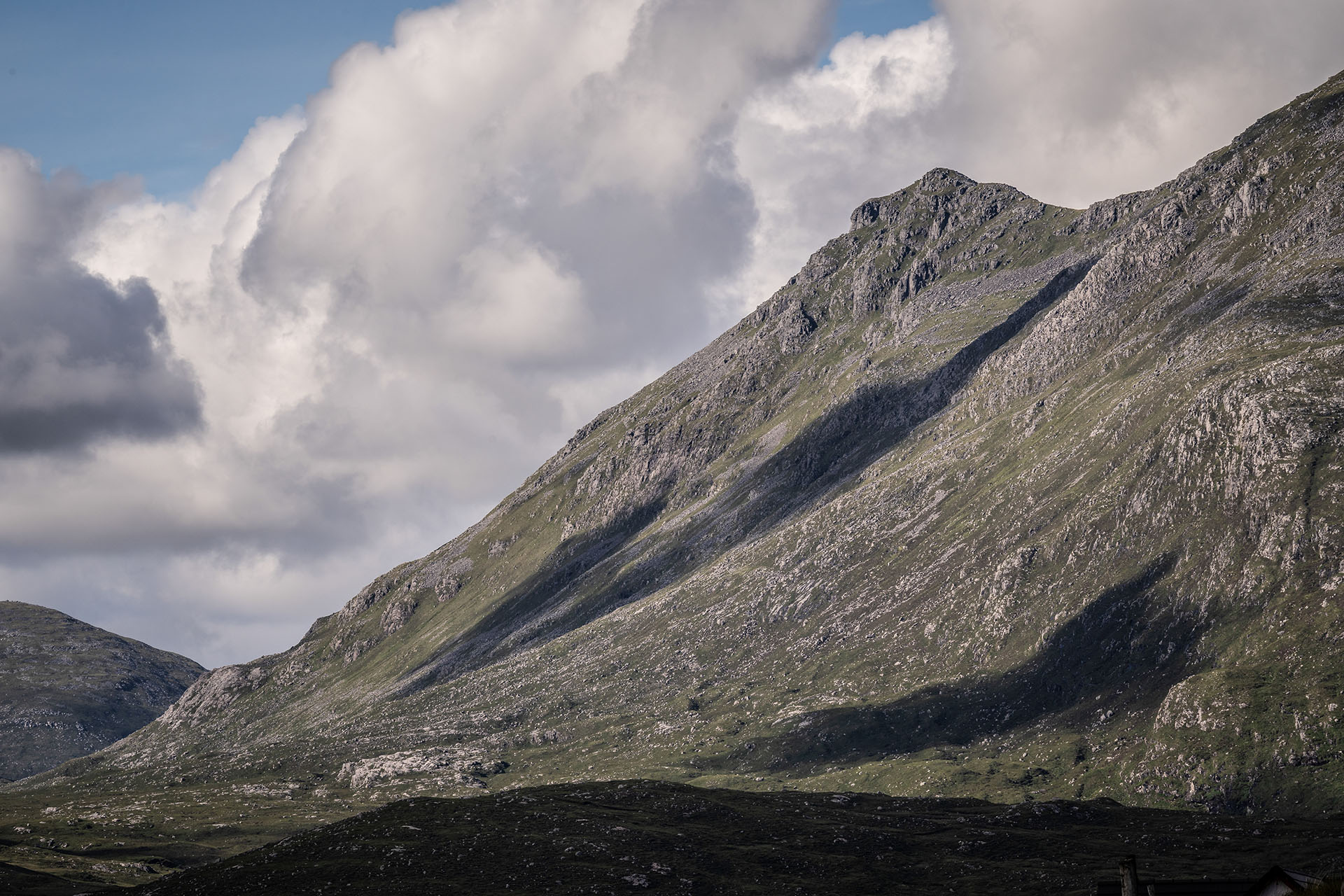
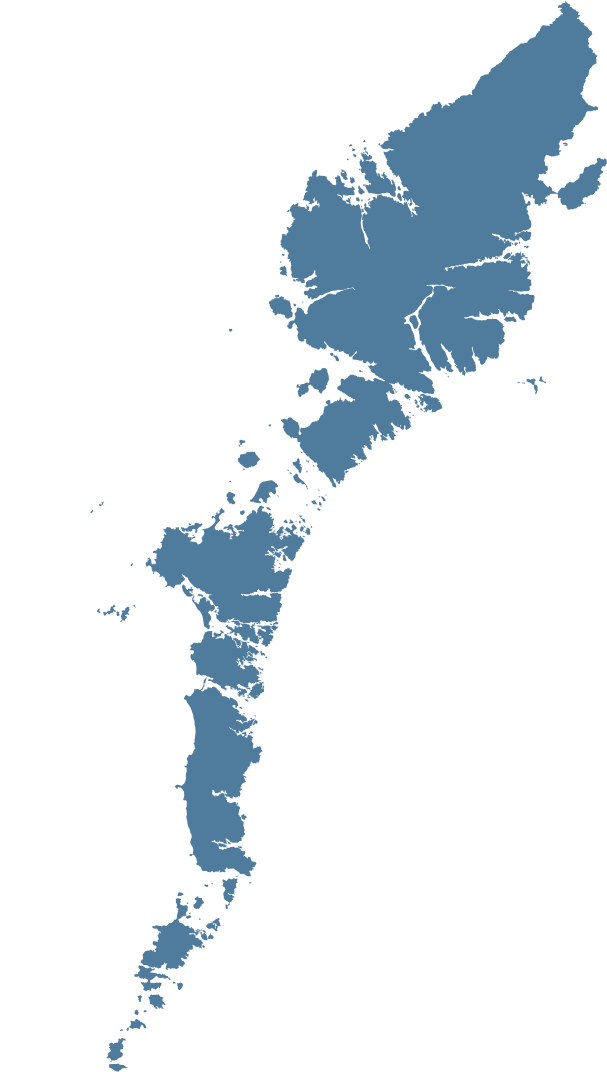
The Isle of Harris, though connected to Lewis by land, is a place apart. Its hills rise higher, its character is subtly its own.
Yet there is one thing these islands share: theirs is a largely oral tradition. Hebridean history is passed down through generations, legend mingling indissolubly with memory, generally untrammelled by dates, often embroidered by hearsay and imagination.
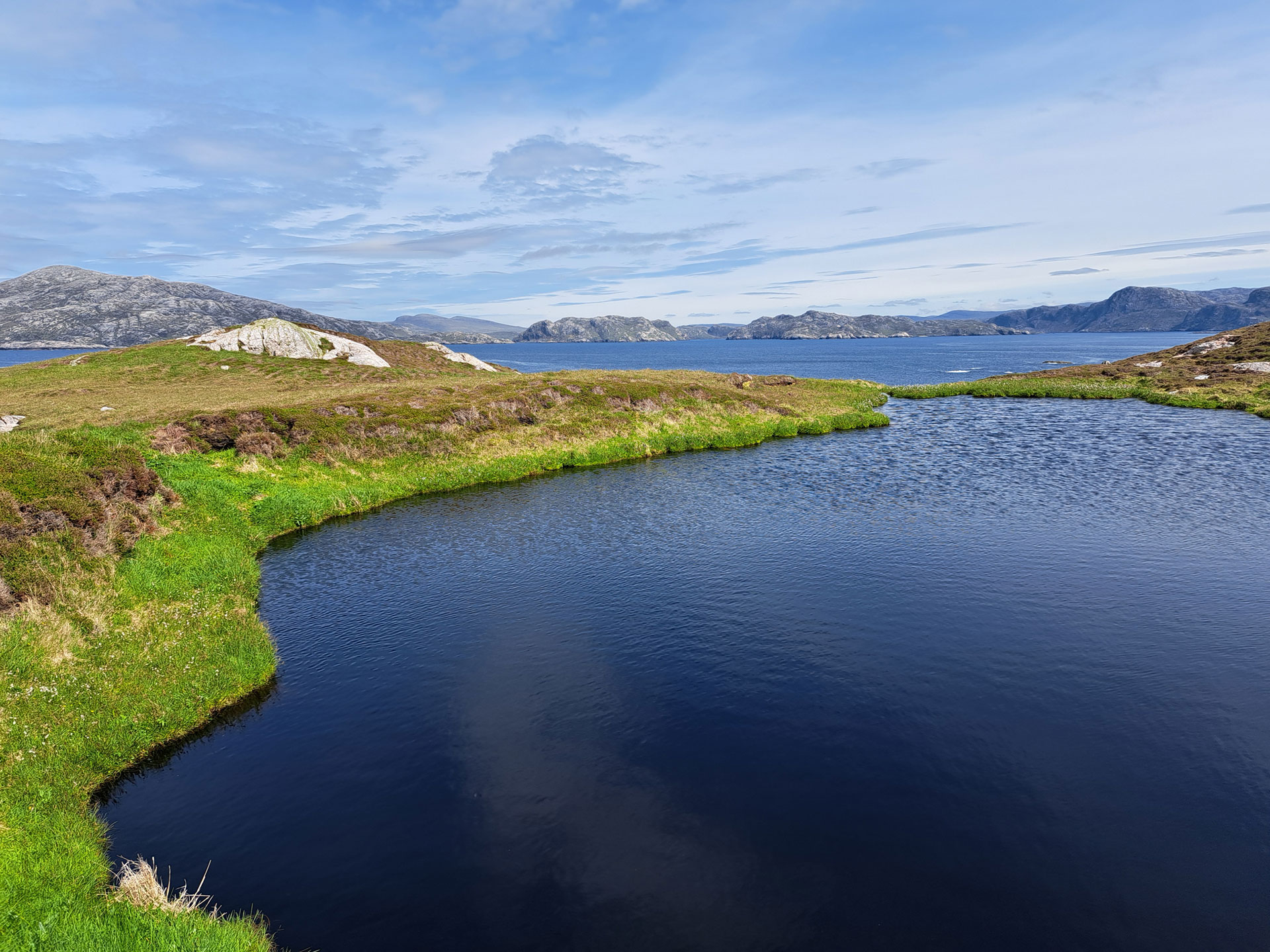
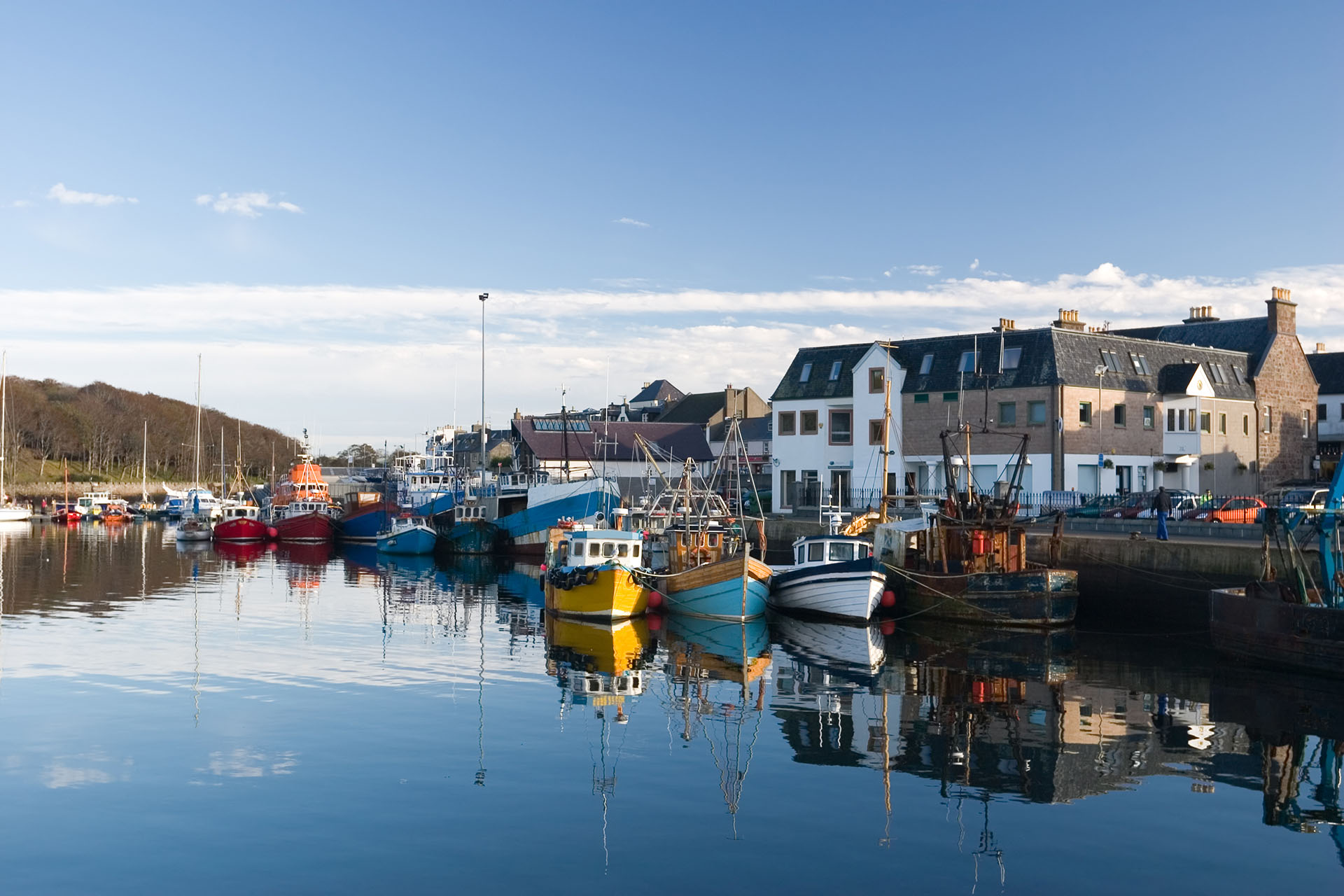
Long ago, there was an Iron Age dun or broch on top of the hill behind the present house: a steep walk up to its ruins is rewarded by a panoramic view across the whole of the Minch. The island is dotted with such ancient sites—standing stones, burial cairns, brochs—every civilisation from Neolithic times onward has left tangible traces of occupation.
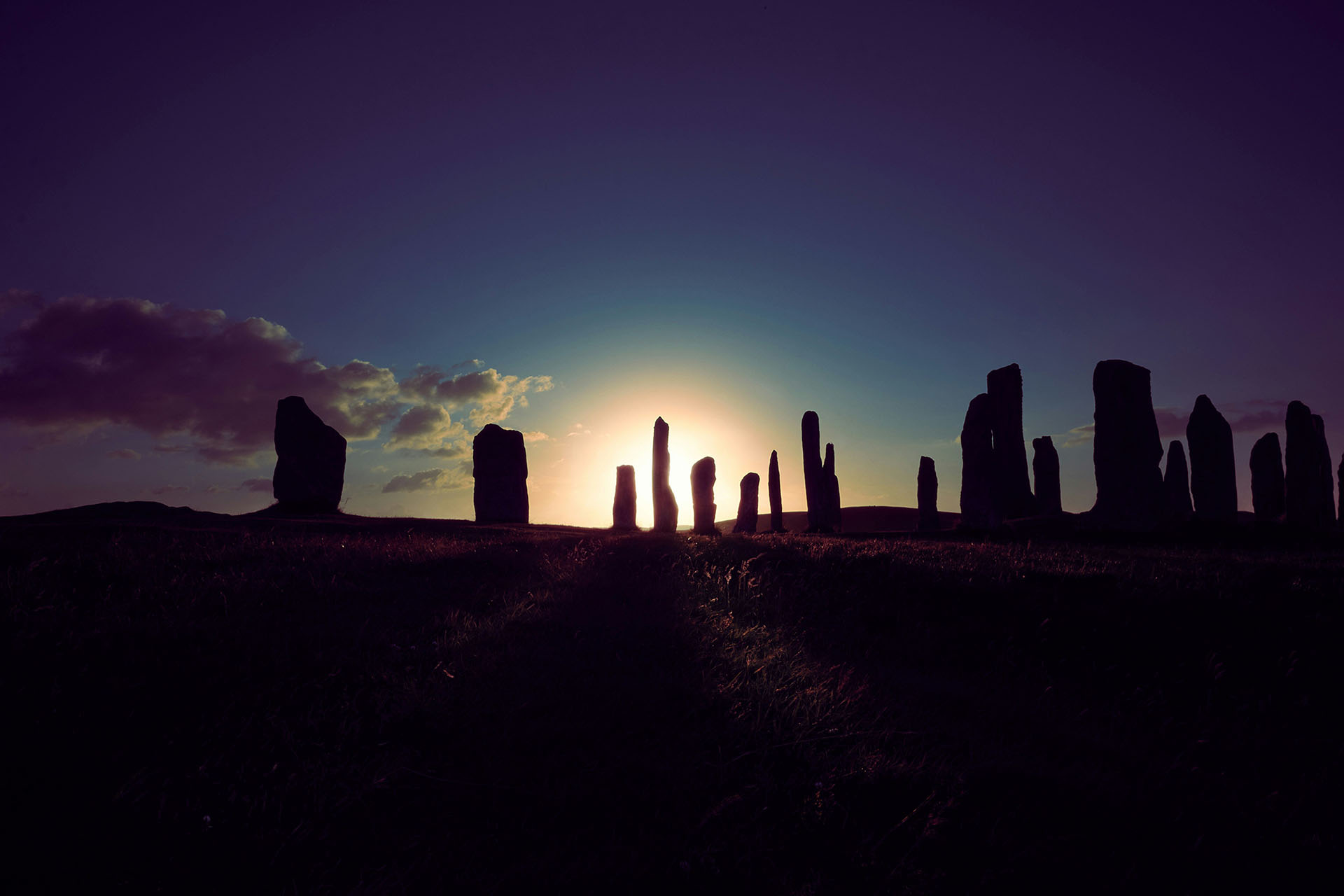
The Callanish Stones on Lewis, older than Stonehenge, stand in haunting formation on a low hill above a sea loch. The Blackhouse villages at Gearrannan and Arnol show how islanders lived until remarkably recently—thick stone walls, thatched roofs weighted down with stones and nets, peat fires burning in the centre of the room with smoke seeping through the thatch. These were not museum pieces; people lived this way into the 1960s.
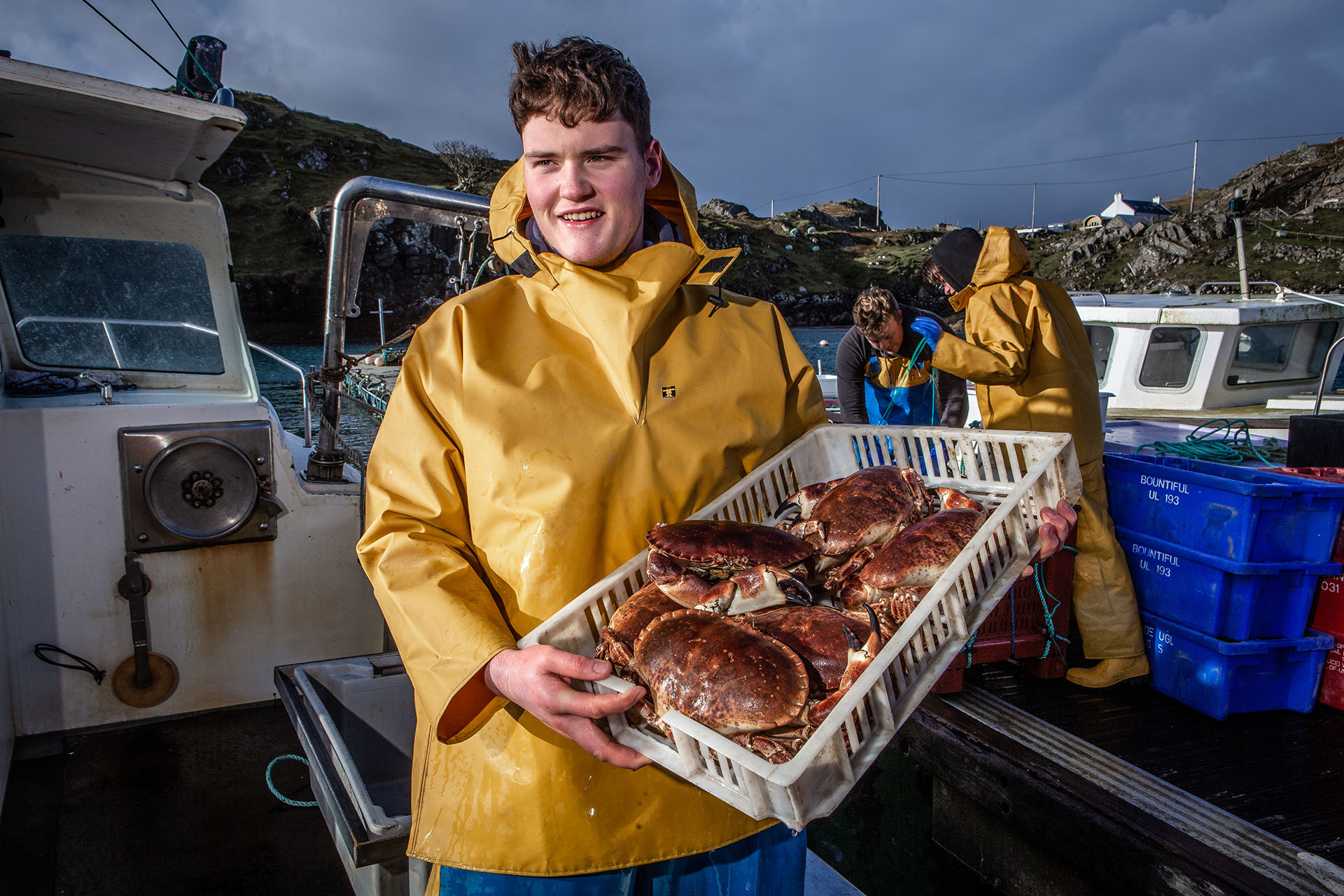
Fishing and sheep-farming have provided employment for generations, though the disturbances caused by the infamous Clearances, coupled with the failure of the kelp industry and the Highland Potato Famine, contributed to the emigration of many islanders in search of a better life. In the early 1800s, over 1,000 people from Harris went to Cape Breton in Canada.
guardian@rodelhouse.co.uk to book | Contact us
Today, the population of Lewis and Harris combined is around 20,000, the majority living in Lewis. Gaelic is still spoken here—you will hear it in shops, at the ferry terminal, in church on Sundays. Road signs are bilingual. The Sabbath is still observed in many households, where Sunday remains a day of rest: shops closed, ferries stilled, a quietness settling over everything.
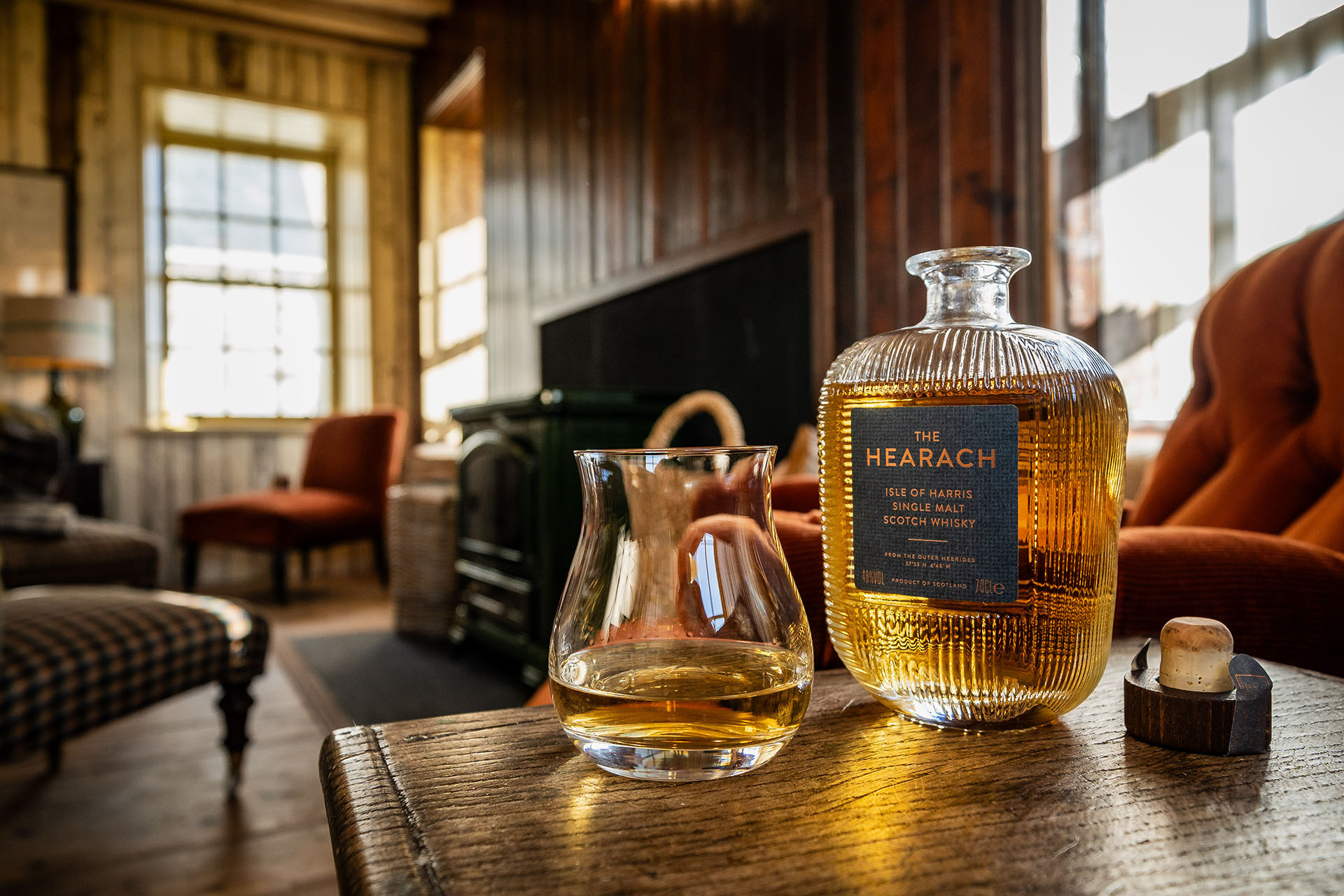
But this is not a place frozen in time. Harris Tweed is woven in homes across the island, a thriving industry protected by Act of Parliament—every metre must be woven by hand at the weaver’s home, using local wool. The Isle of Harris Distillery in Tarbert produces The Hearach whisky and Isle of Harris Gin, both drawing on island botanicals and spring water. Artists, makers, musicians and writers have made their homes here, drawn by the light, the landscape, the quality of life.
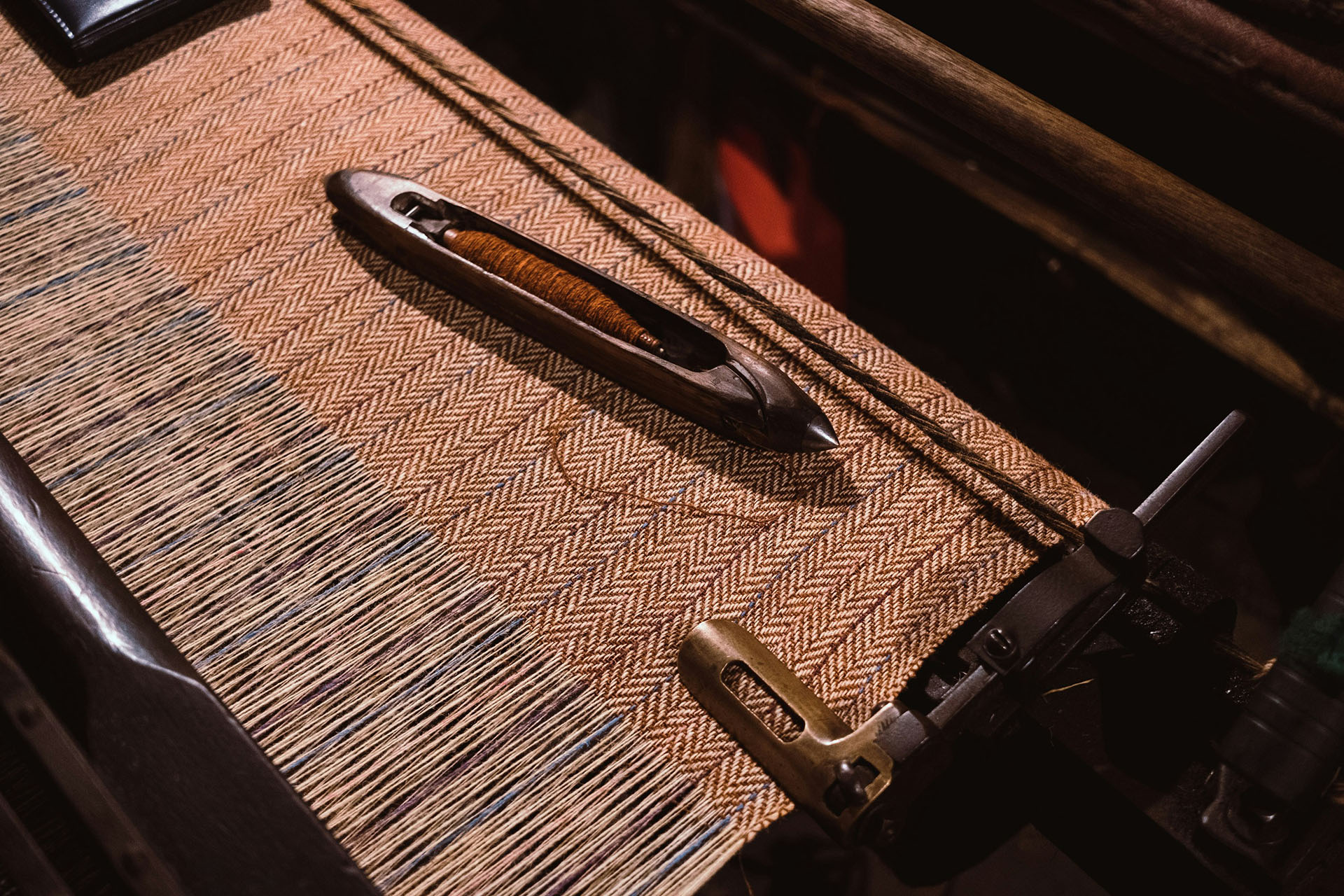
The Isle of Harris Distillery tweed, woven at Rodel.
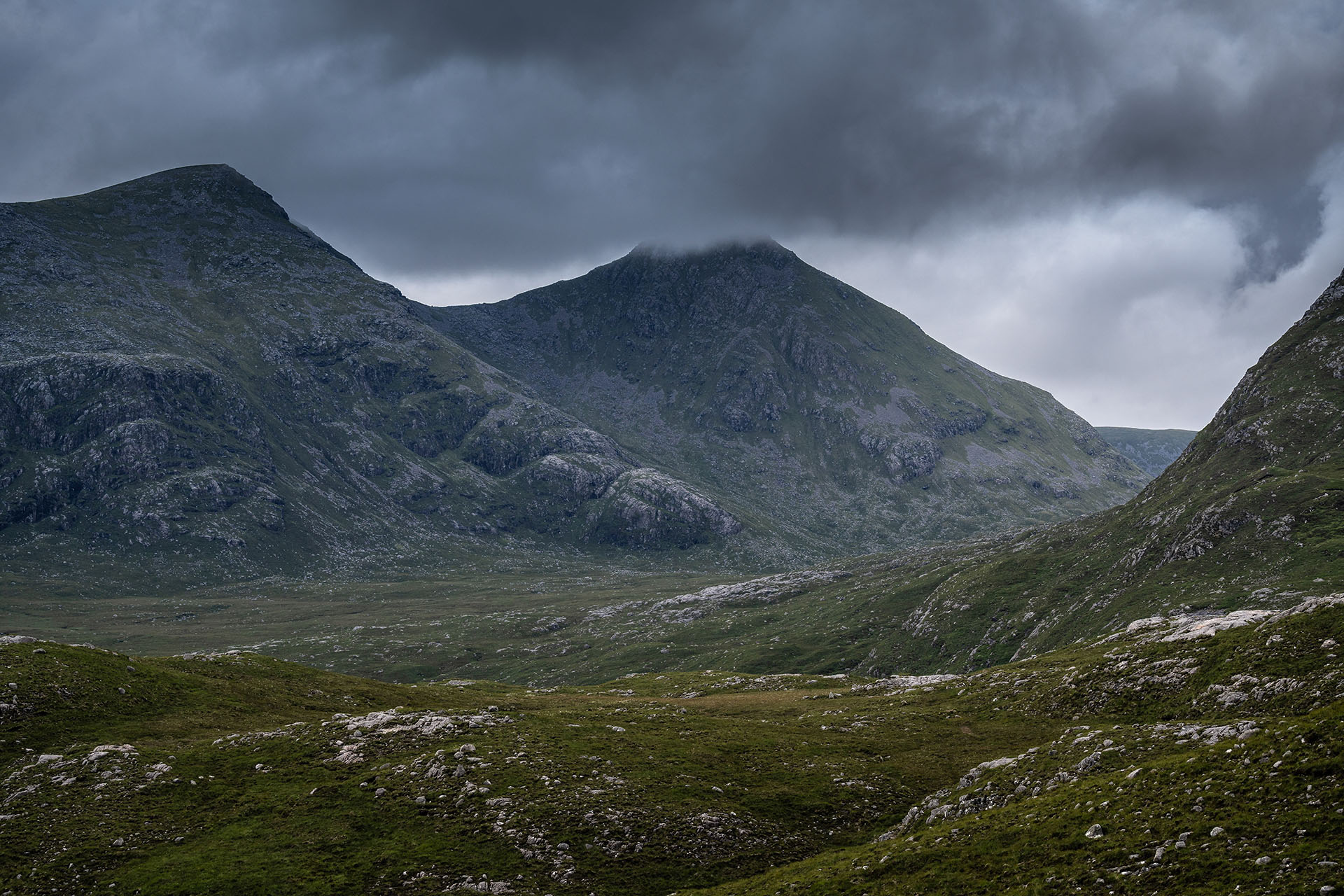
Geologically, Harris is literally awesome. The bedrock is Lewisian gneiss, one of the oldest rocks in the world. Going back to the Archaean, the very earliest geological period, it is complex and many-layered. Having been covered often by other sedimentary rocks, it contains quartz, feldspar, iron, magnesium and pink granite. Throughout billions of years, it has been melted, folded and shaped by unimaginably intense heat and seismic movement and, as a result, it is striped and splashed with a variety of subtle, gentle, beautiful colours.
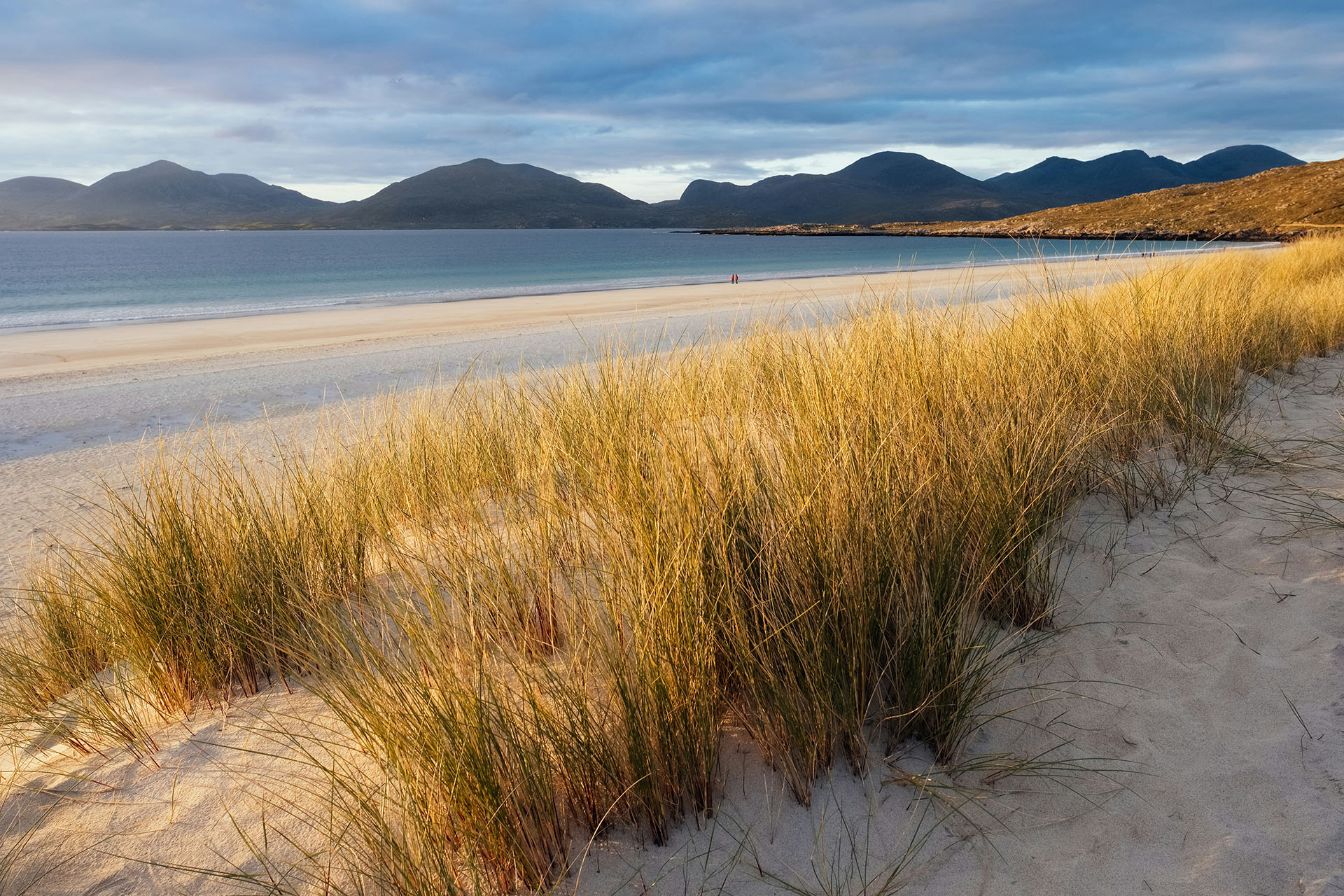
What strikes you first, and last, is how this ancient geology shapes everything you see. The hills of North Harris—Clisham, the highest peak in the Outer Hebrides at 799 metres, surrounded by a wild, rocky range that seems almost lunar in its stark beauty. The vast white beaches of the west coast, backed by machair that blooms with wildflowers in summer. The east coast, all rock and inlet and sheltered harbour. The moors, dark with peat, dotted with lochs that reflect enormous skies.
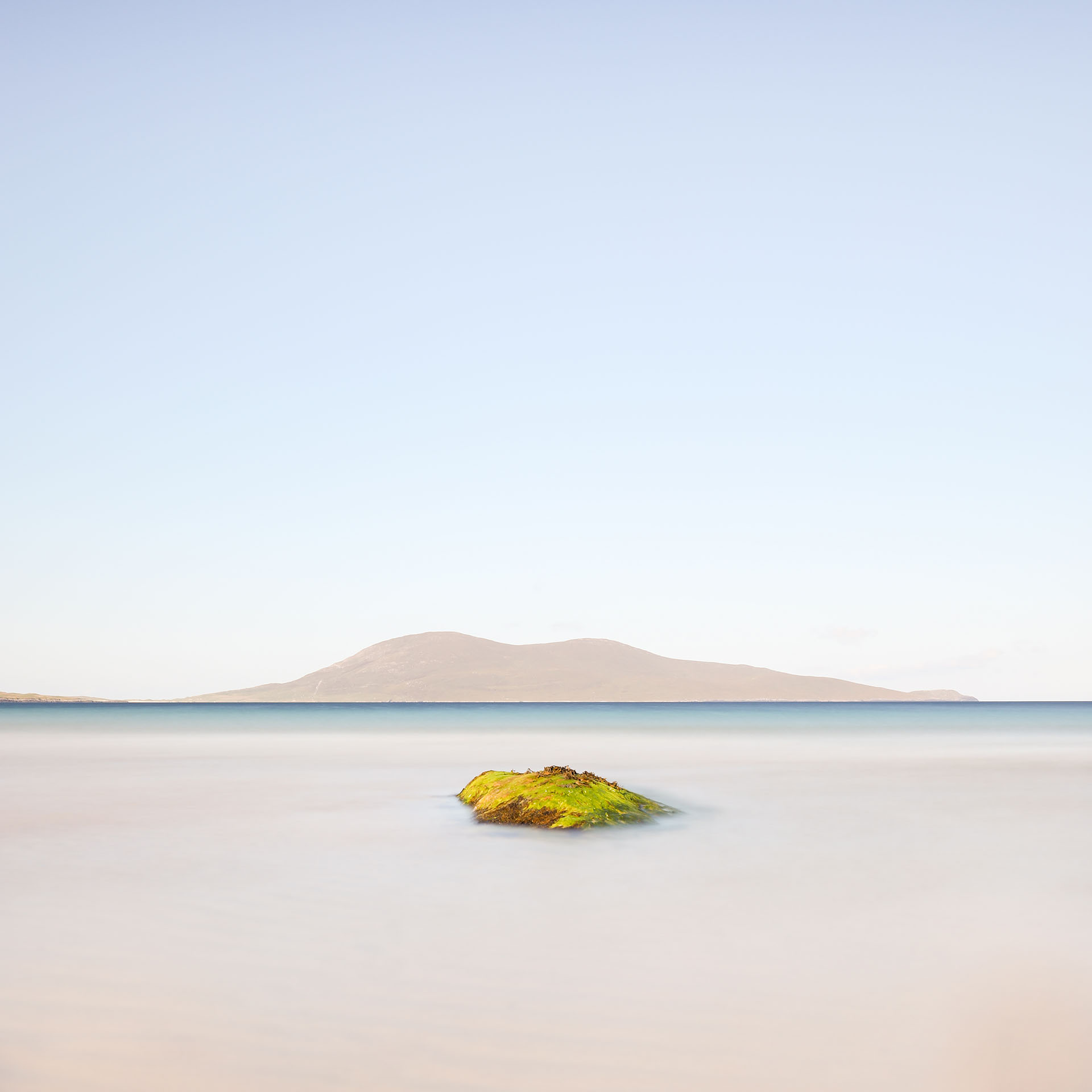
The weather shapes everything. Wind is a constant companion. Rain arrives suddenly, clears just as fast. Mist rolls in from the Atlantic, obscuring the hills, then lifts to reveal them anew. In winter, storms batter the coast with spectacular fury. In summer, the days stretch so long that darkness barely falls, and you find yourself still walking the beaches at eleven o’clock at night in soft, endless twilight.
This is not a gentle place, but it is a generous one. It asks something of you—patience, respect, a willingness to move at its pace—and in return it offers something rare: a sense of being properly, deeply here. Present. Grounded. Home, even if you have never been before.
From Rodel, you can explore it all. North to the hills and the distillery. West to the beaches. South to the scattering of smaller islands—Berneray, connected by causeway, with its own perfect strand. East across the water to Skye. Or simply stay put, watch the light change, listen to the tide, and let the island work its slow magic.